The Construction Industry is Built on Trust

Who do you trust? Who trusts you? The entire construction industry is built on these two simple questions. Without trust, without the belief that people will do what they say they will and can do, the whole industry collapses. We trust the subcontractor will show up on time. We trust the GC can execute the design. We trust the architect has worked through all the pesky design details. And we trust the engineer has anticipated all of the loads and done the calculations correctly.

The most honest person in the world who can’t manage a crew is not trustworthy in the construction world.

We trust all of these people and their talents, and without that trust the entire industry would collapse. The result of that reliance on trust is two-fold. First, we tend to work with the same people over and over again because we know what we’re going to get. We’re familiar with their capabilities and understand their constraints, which we can work around. The upside of that is the more trustworthy you are, the broader your reach and the greater the likelihood you can expand your business.

We often talk of trust in terms of truth-telling honesty, reliability and other personal characteristics of what we would consider a “good” person. But trusting someone in a business relationship also means you trust their ability to manage people and resources in a way that is efficient and predictable. The most honest person in the world who can’t manage a crew is not trustworthy in the construction world.

The second result of an industry entirely built on trust is that it is slow to change. If you are uncertain about a product, such as a new rainscreen fastening system, or a service, such as an automated final-mile distribution model, you’re going to be slow to adopt it. You’ll wait till it’s proven and has shown its trustworthiness.

In our industry, we like our well-worn paths because we’re confident in our success and we can build a business based on that success. Experimental ideas bring in too much potential for chaos, and that is the death of any company in our industry.

There is, though, a chaos agent in our midst that undermines all the trust we build with our business relationships and they with us. Price. The industry’s reliance on low-price bidding undermines the very foundation of the industry itself. It strikes at the heart of trust because we are pushed to accept the lowest (or a lower) price even when we don’t trust the outcome or the people involved.

I would like to see research on this, but I would be willing to bet that 99.9% of conflict in construction comes about because we trusted someone to do something but because we had to get a lower price they were actually incapable of delivering on what we trusted they would do.

There’s a lot to unpack with that idea, including improved communications helping to build trust, but the idea is that price and trust work in opposition to each other.

Think of trust as value. With trust, we build value. Our clients get more for their money because we are trustworthy. But price lies in opposition to value and if our clients want a lower price, that means they are also asking for lower value. And what they’re really telling you is they don’t completely trust you. You have not convinced them of the value of your service or product.

The only way to do that is to work over time to build up trust so they will begin to value you and move away from undermining the process with a focus on price. Companies that can demonstrate their value earn trust and can stop competing on price.
Doing vs. Knowing How

There is a great scene in the James Michener novel “Chesapeake” that serves as a model for the metal construction industry. A Chesapeake Bay waterman piloting a skipjack comes across some day trippers out of Annapolis who have run their sailboat aground. He offers to get them back on their way, but they’re dubious that his little sloop will be able to get their large sailboat unstuck.

Doctors get paid for knowing how, carpenters get paid for doing.

The captain offers to do it for $50, and the day trippers finally agree. He then directs a young crew member to take one end of a line, swim to the other boat and tie it to the very top of the mast. The agile crew member completes the task quickly and the captain secures the other end of the line to the skipjack. Then, he sails out perpendicular to the sailboat, pulling the mast down toward the water. Just as the gunwale is about to touch water, the boat pops free and the task is completed. Simple.

In fact, the day trippers feel it was too simple and are reluctant to cough up the $50. The captain replied with words that every person in our industry should memorize. “It’s not in the doin’. It’s in the knowin’ how.” The day trippers paid up.

All of our construction pricing is based on the amount of time it takes to complete a project. We project our costs for installation almost entirely on how long it takes to erect the steel, install the roofing, pour the concrete, hang and tape the drywall. Every project is broken down into discreet tasks that have an effort-related element to it. Additional services, such as engineering, are based on time involved in the work, so even the obviously “knowin’ how” part of the work is priced on the “doin.”

In short, we get paid for doing the work, not for knowing how to do the work.

Another quick anecdote. When I was a carpenter back in the day, we often joked that after eight or 10 years we’d know everything we needed to know about carpentry and could truly call ourselves carpenters. But, if we spent the same amount of time in college and medical school, we would be able to call ourselves “doctors.” Doctors get paid for knowing how, carpenters get paid for doing. Granted, there is a bit of difference in technicality and responsibility between a doctor and a carpenter, but the main point is to show how much we undervalue trades people.

So, how do you get paid for knowing how? For most in the construction industry it’s by finding a better, more efficient way of doing the task. You discover a shortcut and you can still charge the rate at the traditional time. That only holds, though, for as long is takes the industry to catch up with your best practice.

Another way is through the design-build process. By getting involved in the design and engineering stage of a project, contractors and trades can see their knowledge get rewarded. It’s essential to be able to articulate how that involvement betters the entire construction process, and contractors should be adept at saying what they bring to the table.

Can you do that? Can you explain in a clear way the value of the knowledge you bring so that you can be paid for it? If not, you’ll only ever get paid for your effort, not your brain.

Maps, Maps, Maps, Maps

There are a gazillion ways to communicate, but one of my favorite methods is maps.

Early in our relationship, Suzanne and I divided certain responsibilities. The divisions fell predominantly along lines of competence. It fell out quickly that I often mispronounced words. I mean I really, completely, embarrassingly mispronounced words. I knew the words from print, but often had not heard them spoken. “Chasm” and “abyss” come quickly to mind, and they represented the location of my stomach after hearing their correct pronunciations.

During our courting, we also learned that I kick butt with maps and directions, while Suzanne struggles. Maybe it comes from my Midwest upbringing, with our easy grid of North-South, East-West streets that give a constant sense of bearing. Or it could be a genetic thing. My dear mother-in-law lived in Vienna, Va., for nearly 30 years and thought that every time she drove into DC, she was heading north, not east towards the rising sun. Bless her heart.

So, the family phrase became, “Suzanne is in charge of pronunciation; Paul is in charge of directions.” You have no idea how many arguments you can head off with that simple understanding.

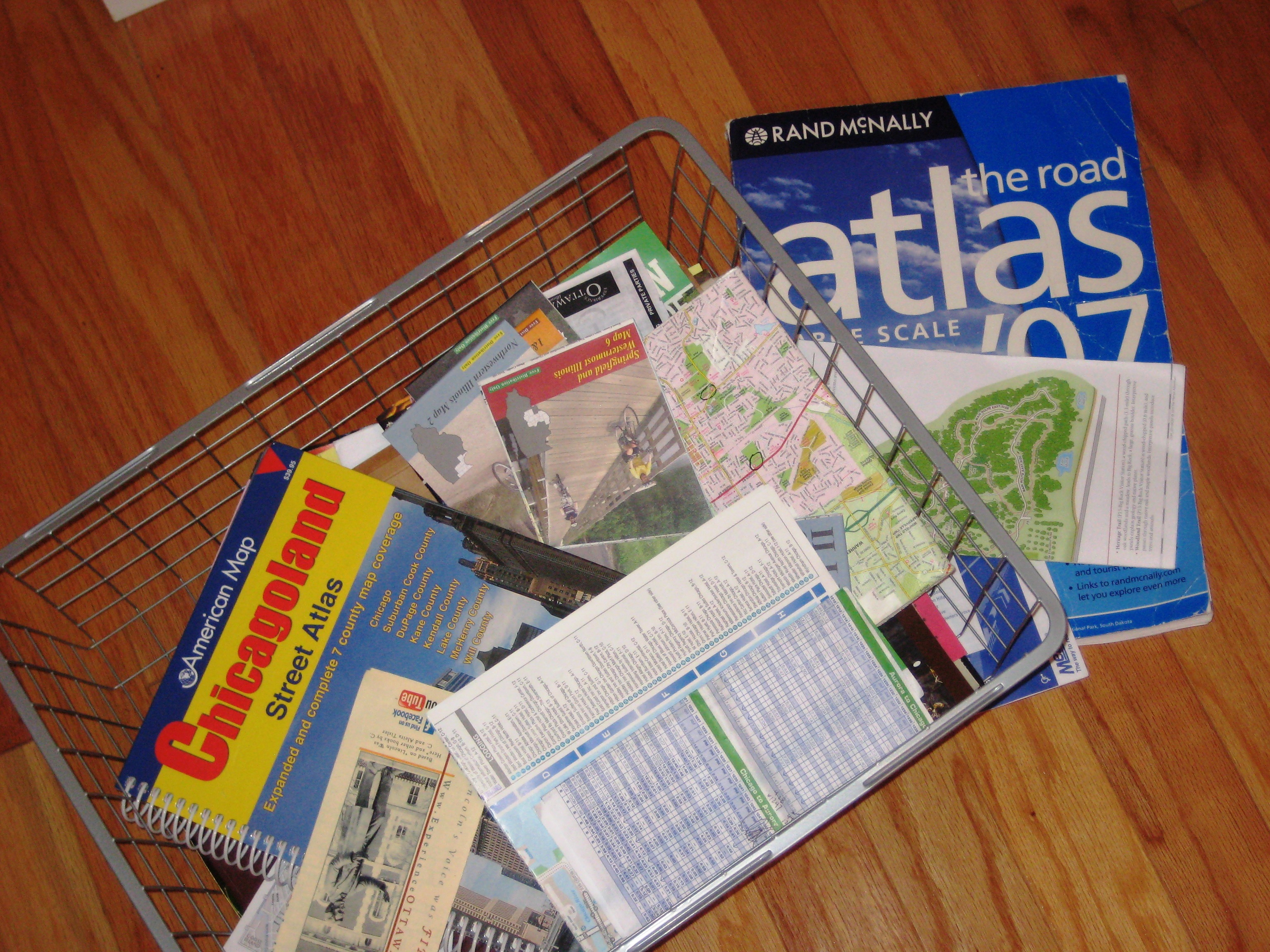
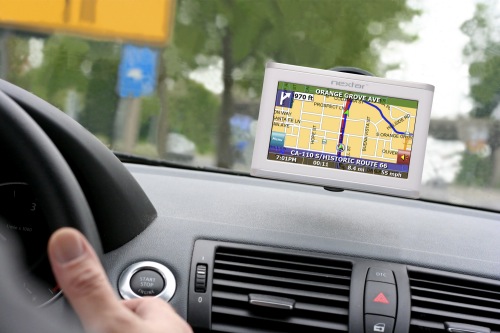
My real point is I love maps, and I hold an inordinate amount of pride in my ability to navigate using one. But the future of printed maps is in doubt. Why? Global positioning systems (GPS). Instead of spreading the Rand McNally on my lap and determining how long my bladder can hold out until the next rest area, I just punch a few keys on the dashboard monitor and not only come up with a time, but six alternative destinations that provide bathroom solutions and snack possibilities.

Before

So, you’d figure that now that any Tom Dick and Mother-in-law has my vaunted capabilities, I’d be miffed about this changing technology. Perhaps, I should lament the death of printed maps and rail against the heavens because electronic media has usurped my distinction.

After

Truth? Let me answer with a quick question. Have you ever driven through the Catskills? After dark? Trying to find an obscure hotel? Now that’s a place you can get lost for a long time. Just ask Rip Van Winkle. Even with my over-the-top superior mapping and navigation skills, I fell in love with my rental car GPS, which we quickly named “Ingrid” for her Teutonic efficiency.

Next time you think about your love of books and magazines and all things print, remember that love may prove as fickle as a high-school crush.

There’s something I love even more about electronic media, though. It saves space.

Before

After

Sentence of the Week: Week 6

Five minutes later the bow-chaser, neatly slung by its train-loops, side-loops, pommelion and muzzle, floated gently over the Sophie’s fo’c’sle within half an inch of its ideal resting-place.

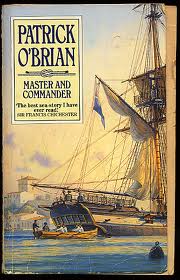
Oh, I do so love a good sea yarn, and the Patrick O’Brian series of Jack Aubrey novels is among the best. You may know it better from the Russell Crowe movie, Master and Commander: The Far Side of the World.

Cover Photo from Master and Commander
A fabulous, jargonful book.

This sentence is pulled at random from the novel and completely indicative of two countervailing issues. First, this guy O’Brian knows his nautical stuff. Second, the reader digging into this world can be at a loss about what the exact heck is going on here.

Let me ask a few questions.

  • Do you know what a bow-chaser is?
  • Do you know what train-loops are? (I’m not even certain I should put that sentence in the plural.)
  • Or a pommelion?

On other nearby pages, I ran into these words:

  • Puddening. Definition: A bunch of soft material to prevent chafing between spars (you know what those are, right?) or the like.
  • Breeched. Definition: Something you do to cannon on a sailing vessel that I’m still uncertain about, but it does not involve pants or slacks.
  • Frapped. Definition: Another thing you do to cannon on a sailing vessel that is hard to explain but clearly very specific and definitive. I know this word from earning my Pioneering merit badge in Boy Scouts. Is it the same thing?
  • Sweeps. Definition: Oh. Oh. I got this. Oars.
  • “Trice up. Lay out.” Definition: A command given to the crew that involves raising the sheets — sails to us land lubbers — and something else that I can’t figure out.

Okay, that was fun, but my point is to talk about jargon in communication, and there is no other environment more jargonly than sailing. Who else would call rope a “line?” By the way, “larboard” is what we now call “port.” Forgive me. This game could go on forever. And ever. Don’t believe me? Here’s a link to a Wikipedia  entry for nautical terms that has nearly 900 entries.

So, what’s a poor writer in 21st Century America supposed to do?

Rule #1: Avoid jargon.

Rule #2: Avoid jargon.

Rule #3: Avoid talking about sailing. Except to sailors. And they just love this stuff. The longest dinner of your life will be the dinner you sit next to someone who loves sailing. The second worst dinner companion is a carpenter. Who really wants to hear about “S4S?”

Here’s my suggestion for those of us who have to communicate with the real world. Just after you complete your hunt for cliches, set sail on a jargon cruise. Hoist high the sheets, let the braces do something or another, and let out the blah, blah, blah.

An Email Conversation


****************************************************************************

She wrote, “I would like to get the chance to speak with you further.  Please let me know when might be a convenient time for you.”

He wrote, “My schedule today [Friday] is wide open, so whatever is convenient for you will be fine with me.”

She wrote, “How does Tuesday at 11am work for you?”

He wrote, “Tuesday at 11am works fine. Do you want me to come into the office or are we speaking by phone?”

He waited.

He waited.

He waited.

He called and left a message.

And he waited.

And he waited.

And he waited.

Monday afternoon at 3 o’clock the issue was resolved. By email.

******************************************************************************

That is a verbatim transcript (without the images) of an email conversation I had. Words matter. You may have heard that here, but sometimes spoken words matter more than written words.

A phone conversation would have resolved this appointment in 5 minutes, prevented any miscommunication, and provided a foundation for a better formal call.

Too often I see people in the workforce trying to do the job only by email. We once had a young woman attempt to set up an entire event for 150 people in a city two time zones away without ever making a phone call. Not to any vendors or the hotel or participants or sponsors. It took her five times as much effort, and we only resolved several major issues at the last minute.

Why did she do this? Because people hide behind email.

Pick up the phone. Reach out and touch someone.

Postscript: The Tuesday phone conversation lasted less than ten minutes. We could have done it Friday and would have been 2 working days ahead of schedule. That ain’t peanuts.

Coyote Calls for Change

Warning: Not for the squeamish.

This fellow — or one of his wily brethren — stopped by our house last Saturday morning at 4 am.

His path intersected with this fellow’s — or one of his furry pals.

Citizen number two did not fare well at the crossing, and Suzanne and I heard the outcome transmitted with four quick, heart-rending squeals followed by silence.

We had just settled our heads back on our pillows when we detected the sounds of dining. Unfortunately, they were not the genteel clink of silverware on china or click of crystal toasted to crystal. No, we heard tooth dividing flesh and bone. When we got to the open window, Wily Brother stood poised in our front yard, left paw firmly holding Furry Pal in place. He glanced up at us in the window. He showed no look of triumph or shame or remorse. He looked like a coyote always looks — hungry. And you can’t fault him for that or for his success.

It is disturbing to have your front yard become a hunting ground and even more disturbing to have it become so successful. Because the next night, while I was out of town, Suzanne reported that Wily Brother returned at 1 am and crossed paths with another visitor, but it wasn’t any of Furry Pal’s friends. This feline visitor had a real name and belonged to some family in the neighborhood, but it shared the same fate as the rabbit.

A blog about words and communication may seem a strange place to raise the topic of successful predators in modern suburbia, but I broach it to make this simple point. In these two events, there were three fates. The coyote sated his hunger. The rabbit and the cat died. And the two people watching were profoundly affected by the events, and their lives were changed. Suzanne, particularly, felt the effect, and she acted on a choice she has long pondered — to commit to a vegetarian diet.

People can change. Coyotes cannot.

Our ability to communicate sophisticated ideas and achieve understanding allows us – compels us – to change. The words we use have far greater power than the coyote who can never change. The coyote can prey on small animals, but our communication can destroy civilizations. Words matter.

Sentence of the Week: Week 5

“…is thought to work by…”

If you have read, seen, or heard a drug company promote its products recently, you’ve heard this phrase. Watch this commercial from Pristiq, an anti-depressant from Pfizer. The phrase occurs at the 26-second mark.

Pristiq is not alone in this trend. Check out Avastin for colorectal cancer; Abilify for depression, bipolar disorder, and schizophrenia; Lyrica for diabetic nerve pain; and Lunesta for insomnia. They all are “thought to work,” “believed to work,” or “may work” in specific ways. But the marketers never claim any of them “definitely work,” “actually work,” or are “proven to work” in any way whatsoever.

When I first heard “Pristiq is thought to work by affecting the levels of two chemicals in the brain: serotonin and norephinephrine,” I sat up and said, “Huh?”

You may have had a more erudite response, but I just couldn’t imagine that Pfizer’s lack of conviction about how their product worked could lead to any level of consumer confidence in its efficacy. Isn’t this the first rule of sales? You have to believe in the product to sell it? How can you believe in a product when you don’t even know how it works?

Imagine if you read the following statement in a press release: “The new Caterpillar D Series Mini Hydraulic Excavator, model 305D CR, is thought to have heavier counterweights that may enhance machine stability and might allow increased lift capacity.”

Are there any products that undergo a more rigorous testing procedure than drug products? But every other product makes a far more definitive claim than these do.

The whole thing makes me want to join Tom Cruise and the other nutcases over at the Scientology lab, who disbelieve in any drug therapy apparently because they flunked chemistry in high school. The only reason I don’t join up, of course, is these stupid drugs actually work and help people, in spite of what they tell you in their own commercials.

Oh yeah. Don’t even get me started on the passive voice in this sentence.

Sentence of the Week: Week 4

“The coolest thing about Google TV is that we don’t even know what the coolest thing about it will be.”

Apparently, I’m working a theme. Over these last couple of posts, I’ve developed the “I-don’t-know-where-the-heck-we’re-going” theme. That’s not necessarily a bad thing.

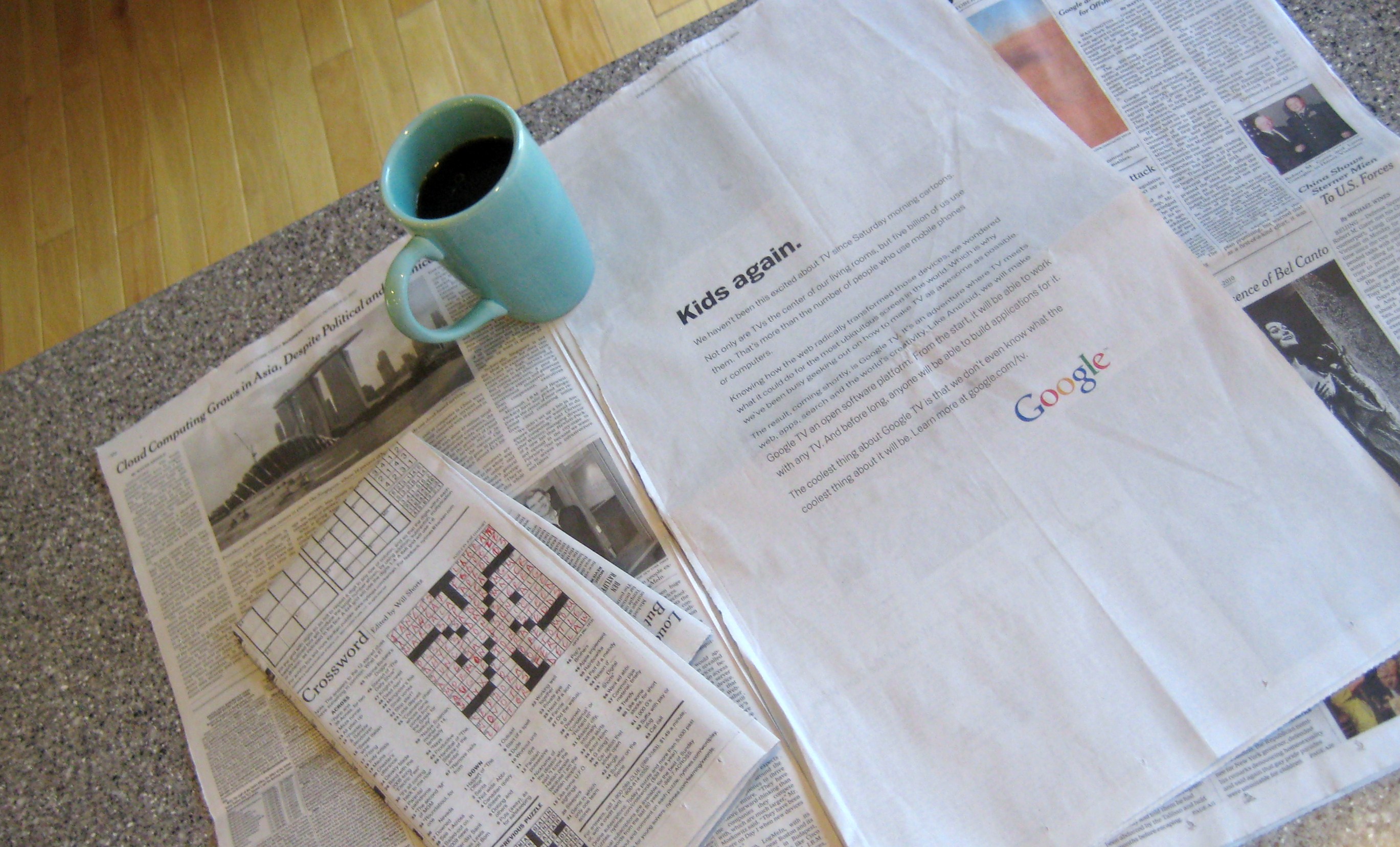
Google Ad
My future begins with coffee and the paper. Every morning.

I found this sentence in an ad for – you guessed it – Google TV. (The complete copy is at the end of this post.) It represents something that corporate America seems to have lost sight of, which is the need for undirected research. My experience of the corporate world is that the only lever managers really work is cost control. Creating value, adding service, and building something new are difficult and risky, and in an era of tighter budgets and higher profit and loss accountability, few managers want to risk creation. Instead, they control.

Google and a few other companies support innovation. They do so by giving their employees the time to pursue their passions without direction. Consequently, we get breathtaking advances that we never could have anticipated. (Please know that I’m not putting Google TV in that category. For all I know, the ad copy may be better than the TV.)

The sentence I chose this week represents the uncertainty of the future and the desire to do things for the sake of doing things. But what I really like about this sentence is its simplicity and repetition. (I’m a sucker for repetition.)

The phrase, “the coolest thing about” opens and closes the sentence. In between, the word “Google” repeats the sounds of “coolest,” offering center to the balance. “TV” rhymes with “be,” creating end rhymes that are not obvious but still delightful. If this sentence were the front elevation of a building, you would find the equanimity of massing and repetition of elements to be very pleasing visually. The same is true of the sounds.

Read it out loud. It’s not poetry. It doesn’t scan, but it is fun.

Let’s be truthful, though. It is not a brilliant sentence. It is honest, though, and a good honest sentence at the end of some ad copy is worthy of notice.

My only complaint about the sentence is that it is not the last sentence of the ad. One other sentence follows: “Learn more at google.com/tv.” That sentence – the call to action – blows and undermines what could be a very powerful finish to the copy. Oh well. Nobody’s perfect. Not even Google.

Full Ad Copy

“Kids again.

We haven’t been this excited about TV since Saturday morning cartoons.

Not only are TVs the center of our living rooms, but five billion of us use them. That’s more than the number of people who use mobile phones or computers.

Knowing how the web radically transformed those devices, we wondered what it could do for the most ubiquitous screen in the world. Which is why we’ve been busy geeking out on how to make TV as awesome as possible.

The result, coming shortly, is Google TV.  It’s an adventure where TV meets web, apps, search and the world’s creativity. Like Android, we will make Google TV an open software platform. From the start, it will be able to work with any TV. And before long, anyone will be able to build applications for it.

The coolest thing about Google TV is that we don’t even know what the coolest thing about it will be. Learn more at google.com/tv.”

What Is New Is Old Already

The pace of change in communication has become so breathtaking that even the most dedicated followers are struggling to keep up. In the early 90s, when I was a young editor at Remodeling magazine, I could recite the location and area code for every major city in the country. 415? San Francisco. 312? Chicago. 303? Denver.

I could do that because I spent hours on the phone, accomplishing what every editor does today with a simple internet search. And, back in olden times, we knew those area codes, because every city only had one. Now, every city has multiple codes, and they often overlap.

Okay, as my son would say, “That’s a nice story grandpa, but what’s it mean?” It means this. Those changes, while fundamental, were really quite simple compared to what’s happening now. Watch this video from 2007. (It’s only 7 1/2 minutes.) It has been one of my favorites for its vision of what a dedicated community of users can achieve with content integration.

Blaise Aguera y Arcas paints a future that shows how our understanding of the world can deepen and become more sublime through the collective involvement of individual contributors.  As he says,

“We can do things with the social environment. This is now taking data from everybody. From the entire collective memory, visually, of what the earth looks like and link all of that together… make something emergent that is greater than the sum of the parts.”

What’s cool about this vision of the future from more than two years ago? It’s already happening. Here are two examples.

I went to Photosynth.net today and created a detailed view of the front elevation of my house. (Click here to see.) It took me less than 10 minutes to accomplish, including taking the photos. More effort would only have led to a far more dynamic and interactive experience, but consider how much I accomplished with so little effort. That speed of change is awe-inspiring and nearly impossible to track.

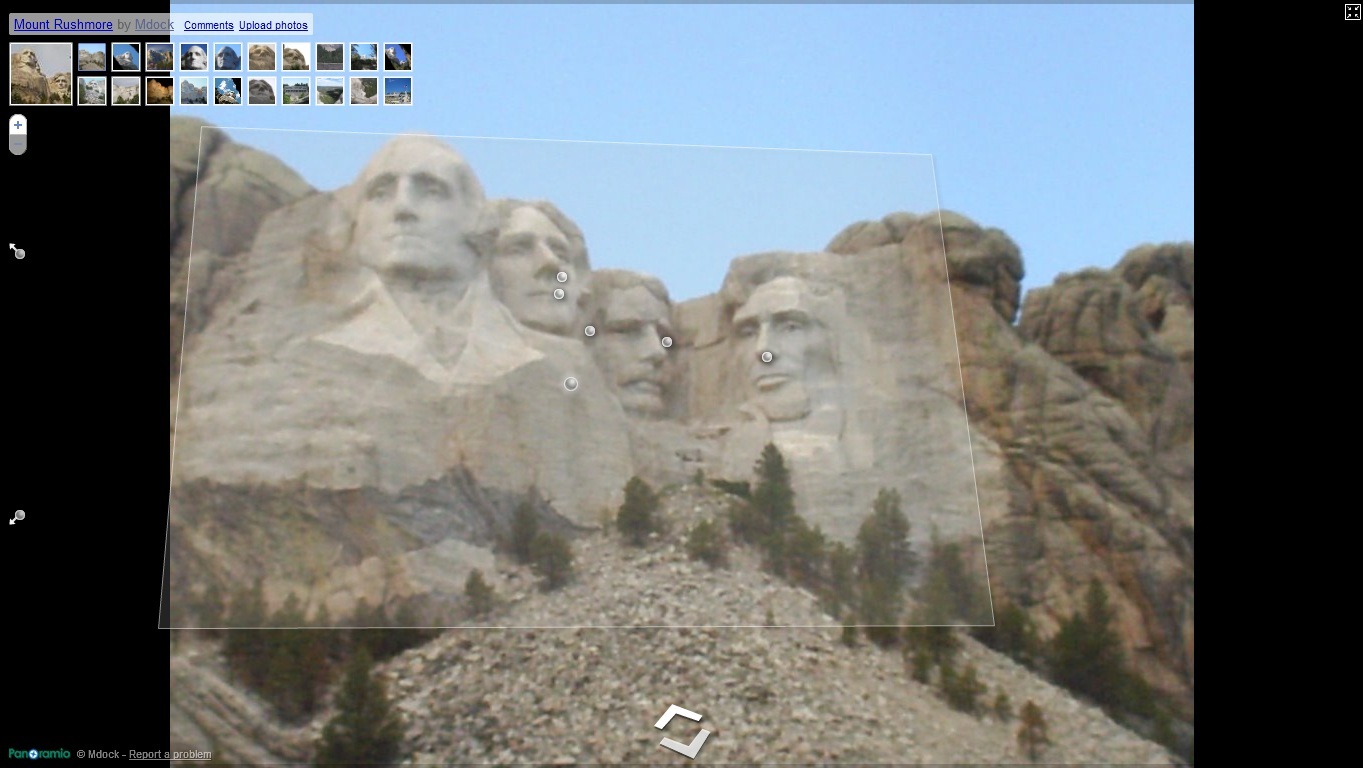
What’s cool about this vision of the future? Go to Google Maps or Bing Maps. Look at the photos posted in popular tourist areas. They’re pulled from Flickr and other sources, and they give you a view of the environment we’ve never been able to capture or navigate. Consider this image I found on the photo options for Google Maps. Each point or arrow moves you to a new view, greater detail, or a different perspective.

We see the same thing being done collectively now that was just a vision of the future in 2007. As Aguera y Arcas said,

“It grows in complexity as people use it, and the benefits become greater to the users as they use it.”

I still return to this video just to experience the frisson of excitement it gives me about the future of communication and the value of connecting a community. We have no idea where this revolution will lead us, but I can promise you two things.

  1. The creation of content will be the driving force of the revolution.
  2. The revolution will provide greater freedom, creativity, and information for more people than any movement in the history of the world.

Those are good things. If the invention of the movable-type printing press eventually led to the creation of the middle-class, then who knows what benefit will arise from even further democratization of information.